
COHERENCE THERAPY
There are many successful ways to bring about change, and many psychotherapy methods. Regardless of the therapy method, lasting change will primary depend on two broad factors: what happens between you and your therapist in the session (in other words the quality of that relationship) and what has happened to you in your life (in other words your deepest learning about yourself and the world.) In therapy with me, we will address both these pillars of change. Although I have advanced training in multiple therapy modalities, the one I am most deeply committed to, is Coherence Therapy.
Coherence Therapy

Coherence Therapy is an evidence-based treatment for a range of problems in psychotherapy backed by the science on memory reconsolidation.
-
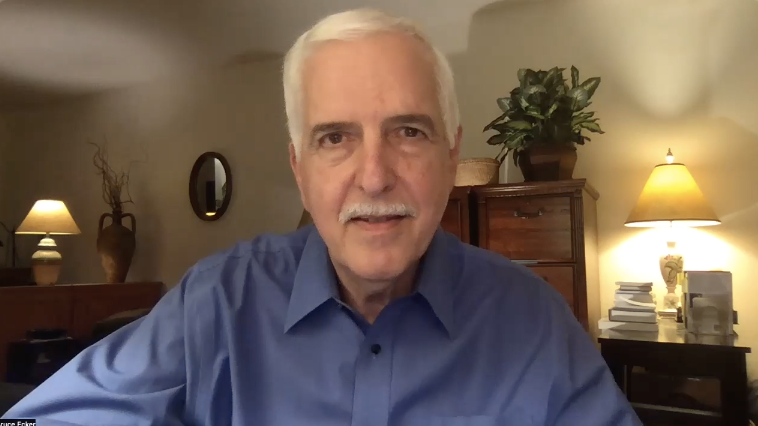
Coherence Therapy is one way of working with the most recent neuroscience of memory reconsolidation. Coherence Therapy was created by Dr Bruce Ecker when he applied memory reconsolidation to the field of psychotherapy.
Memory reconsolidation is the brain’s ability to revisit and revise memory. Many of our psychological problems stem from significant life events when memory is laid down (consolidated) in the presence of strong emotions. In these moments we adopted unconscious programming about how the world works, and what life is like. Since this kind of memory is typically formed early in life, under highly specific circumstances and outside our awareness, in adulthood we are at a loss to explain why certain patterns do not resolve with insight or effort. Memory reconsolidation and Coherence Therapy offer a mechanism for the brain to destabilize existing memory and completely update it with a more reliable and accurate version of how the world works and what life is like.
You can learn more about Coherence Therapy and memory reconsolidation here: https://www.coherencetherapy.org/index.htmtem description
-
A session of Coherence Therapy is experiential, that means, you will be guided to experience your emotions, your thoughts and your physical reactions. You will also talk, of course, but the emphasis is not on thinking and answering questions. Experiential work is done to retrieve information that lies outside of your current thinking and knowledge (if you knew the solution, your brain would already have fixed it). Conventional talk therapy can only work with conscious memory networks and help you counter or modify your current thinking. Coherence Therapy assumes your current thinking is a perfectly coherent symptom for a problem you are solving that lies outside of your awareness.
-
Coherence Therapy can successfully work with any unwanted symptoms that arise out of significant emotional learning: low self-esteem, guilt, loss, anxiety, depression, addiction, psychosis, mood, erratic behavior, hyperactivity, codependency and insecure attachment. Coherence Therapy does not assume that all medical and psychological problems stem from emotional learning. It is not a substitute for medical treatment, crisis stabilization, trauma processing or behavioral change.
-
Coherence Therapy claims to help you through three markers: 1) symptom cessation-the symptom is gone and the behavior has stopped, 2) non-reactivation-the symptom cannot be re-triggered, and 3) effortless permanence-change does not require maintenance or practice. If it doesn’t meet these requirements, change was not “transformational.”
-
You are a good fit for Coherence Therapy is you have a problem or a symptom that bothers you, and you are hoping to learn why it is there and when it will go away. You are a good fit if you can respect the feelings that may come up in therapy. Coherence Therapy has a clear focus and sequential approach; this structure may not be a good fit for everyone. Coherence Therapy is a deep dive, and obviously not suitable when you are in a crisis or feel very fragile.
We have seen that when an emotional learning or schema is the
underlying cause of a therapy client’s presenting symptom, the
schema can be retrieved into direct, explicit experience and then
profoundly unlearned and dissolved by the same sequence of
experiences that neuroscientists identified in reconsolidation
research.
Dr. BRUCE ECKER, developer of COHERENCE THErAPY
who it’s for
Coherence therapy is right for you if you…
Have experienced a difficult childhood or adolescence
Notice destructive patterns in your relationship
Feel ready to experience your emotions
Are willing to be vulnerable in therapy
who it’s not for
Coherence Therapy is not yet for you if you…
Actively struggle with serious suicidal thoughts and self-harming
Your life currently feels chaotic or in crisis
You don’t feel ready to be in touch with inner truth
You have difficulty showing up consistently for therapy